
CAN’T HAVE CHAMPIONSHIP TEAMS WITHOUT GREAT PLAYERS (COACHING IS OVERRATED)
It’s my opinion that coaching is overrated and talent is underrated. This phenomenon is largely due to coaches owning the narrative. Not all coaches, just championship coaches. History is written by the victors; the losers fade into oblivion.
When asked about the key to winning, the successful coach will point to outworking their opponents, high standards, and game preparation. Seldom do you hear a coach point to a talent differential.
In my view, if you want the best zoo, you need to acquire the best animals.
PARITY MAKES THE NFL GREAT
The NFL has successfully created a league of teams with similar, if not identical levels of talent.
The NFL doesn’t merely lead American professional sports on television—it overwhelms them. A routine NFL Sunday game can draw an audience comparable to, or larger than, an NBA Finals or World Series game.
In 21 of the past 24 seasons, an NFL team has gone from last to first in their division.
Though it may seem that some NFL coaches outcoach their rivals, I contend that their players outplay those rival players.
NFL teams spend $25 million to $35 million on coaching salaries for approximately 30 coaches per team. Even the bad teams spend that kind of money on their 30 coaches. Do we really believe NFL coaching staffs can range from elite to trash? $30 million buys elite coaches.
40% of fired NFL head coaches get hired for another head job. Check the bio of any NFL coach, including assistants, and you will find they simply bounce from team to team. It’s an insider’s game.
You could argue that Wade Phillips was one of the worst NFL head coaches of all-time, getting fired in 1994 by the Broncos, in 2000 by the Bills, and in 2010 by the Cowboys. Yet he coached in the NFL for 40 years (Oilers, Saints, Eagles, Falcons, Chargers, Texans, and Rams) and won a Super Bowl ring as defensive coordinator with the Broncos (Super Bowl 50 in 2016).
Part of this is the good ol’ boy network, but most of it is the fact that Wade Phillips was a good football coach and players decide the game.
The NFL has done a terrific job trying to equalize the talent, aka parity. The worst team gets the best player in next year’s draft. The New York Giants and New York Jets spend no more on player salaries than small-market teams like the Vikings and Packers. The salary cap in 2026 is $301M. It’s difficult to stockpile talent with a salary cap.
The only way to develop a talent advantage is through intelligent drafting, trading, and free agents. Keeping players HEALTHY maximizes this talent. In addition, don’t overlook the role of luck. Tom Brady was the 199th player taken in the 2000 draft and went on to win seven Super Bowl rings. You could argue that Coach Belicek was responsible for six of those championships, but he’s been nothing without Brady.
Belicek went 83-101 in the NFL without Tom Brady winning ZERO playoff games and ZERO division titles. He will get fired as head coach at North Carolina soon.
In conclusion, the best 53 HEALTHY players decide who wins and who loses in the NFL.
NO PARITY IN COLLEGE FOOTBALL
College teams can stockpile 5-star, NFL-bound players. Since the beginning, Alabama and Ohio State have attracted the country’s best players, while Northwestern and Vanderbilt have not. This unlevel playing field is now inflated by NIL money.
The rich teams include Ohio State, Oregon, Texas, LSU, Texas A&M, and Miami, all pumping around $50M into their rosters. Teams who used to get the best players don’t get them anymore. Florida, Georgia, Clemson, Penn State, Oklahoma, and Wisconsin have budgets in the $30M range, $20M less than the elites. The Fighting Illini of Illinois tries to compete with only a $20M budget. Even though the total cost for students attending Northwestern is $100K per year, they split up only $15M among their football players.
One could argue that Indiana disproved all of that by winning the national championship last year, but they are the exception. And spending close to $40M can still buy a very solid team.
Indiana did a few things last year that closed the gap with the elites. They were sprint-based, incredibly healthy, and lucky.
Indiana beat Penn State 27–24 on Nov. 8, 2025, but the situation was dire: down 24–20, ball at its own 20, 1:51 remaining, zero timeouts. After Mendoza was sacked on the first play, IU drove 80 yards and won on the now-famous Omar Cooper Jr. toe-tap touchdown with 39 seconds left—his feet came down with roughly an inch to spare.
Indiana beat Iowa 20–15, but Iowa missed a 42-yard field goal with 2:01 remaining after Mendoza had thrown an interception that put Iowa in scoring position. Indiana then hit Elijah Sarratt for a 49-yard winning TD.
And Ohio State in the Big Ten Championship deserves mention: Indiana won 13–10, while Ohio State missed a 27-yard field goal with 2:48 left that would have tied the game.
Indiana was a team of destiny. As Bob Dylan once wrote, “I can’t help it if I’m lucky.” (But to their credit, they were fast, fresh, and healthy.)
HIGH SCHOOL INEQUITY
The inequity in high school sports has nothing to do with salaries and very little to do with money.
The dominant teams are usually private schools that recruit from multiple zip codes, feature top-secret tuition waivers, and provide transportation to athletes who live far away. Their enrollment often allows them to play inferior public school teams with similar enrollments. Some states, like Tennessee, resolve this issue by separating public and private schools in postseason competition. In Illinois, there’s no separation, and the eight classes of state championship football games usually feature mostly private schools.
There’s probably more coaching inequity at the high school level, so private schools, unencumbered by contractual salary schedules, can pay an elite coach tons more than a public school. They often make the offer more attractive by giving the head coach no teaching assignment.
So let’s take a look at public schools, where players are students living within the boundaries of the school district. Let’s assume there’s no illegal recruiting and no financial rewards given to star athletes or their parents. Obviously these things happen in some public schools, and they get away with it because state associations have no investigative bodies. There are rules, but very little enforcement. Most public schools do a decent job policing themselves.
For discussion’s sake, let’s say you have schools playing football against schools with similar enrollments, with every player legally living within the boundaries of that school district, with the head coach making around 10-20% of a teacher’s salary and having the same-size staff. We can even stipulate that the coaches are of similar expertise. How do you maximize wins when theoretically you have similar numbers to choose from?
The answer is simple. Attract the best athletes in your school to your football program. Improve the athletic qualities of all your players (sprint, lift, jump, bounce, and throw). Maximize your retention rate. And keep your roster fast and healthy.
The paragraph above summarizes SPRINT BASED FOOTBALL (also known as Feed the Cats). Before we outline Sprint Based Football, let’s take a look at the old-school approach.
FEED THE DOGS, KILL THE CATS
I’ve never understood why some men are attracted to physical pain, deprivation, and danger. Why do we glorify reckless, foolhardy gluttons for punishment? Why is the willingness to suffer considered such an admirable masculine trait?
Perhaps it’s genetic. Everything is genetic. But that creates an evolutionary paradox. Wouldn’t our danger-seeking ancestors have been more likely to get themselves killed before passing along their genes?
You would think natural selection would favor those smart enough to avoid unnecessary pain and danger, rather than those who seem determined to seek them out.
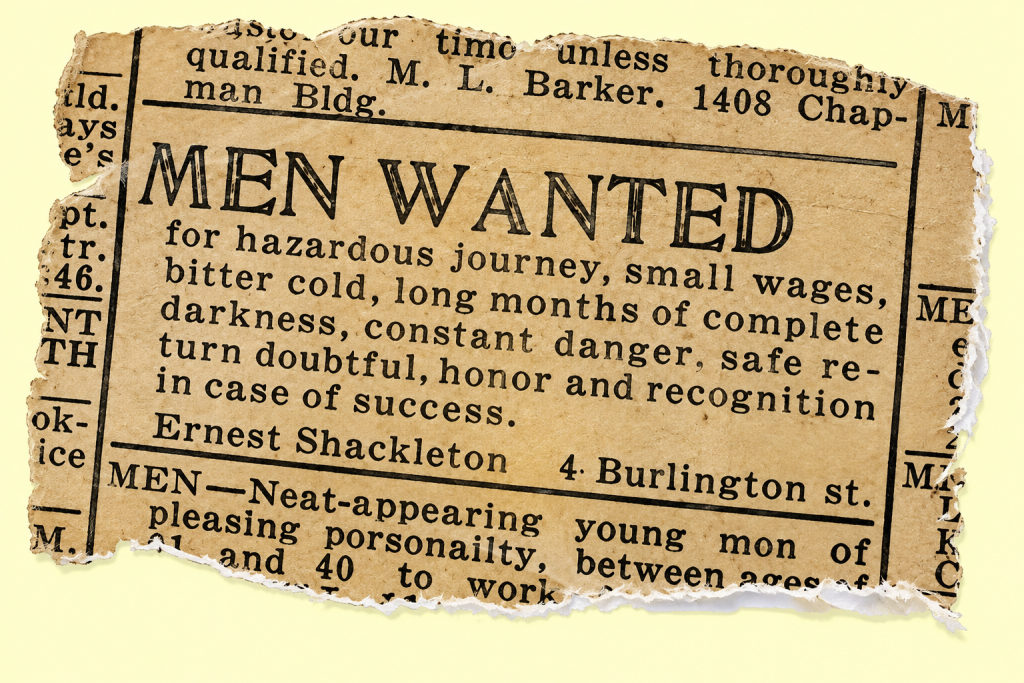
Men who signed up for Shackleton’s voyage to Antarctica on a ship called the “Endurance” signed away their freedom. They gave away their independence to be under the dictatorial leadership of a ship captain. They left their wives and family with the knowledge that “safe return is doubtful.”
It’s my belief that most football players sign up to play the game, enjoy the friendly camaraderie of being on a team, and be popular with girls. A small percentage of football players have the same delusional DNA as those men who signed up for Shackleton’s disastrous voyage. (Even though the voyage was a disastrous expedition, it became one of history’s greatest survival stories; the Endurance became trapped in Antarctic pack ice, was crushed, and sank. All 28 men miraculously survived.)
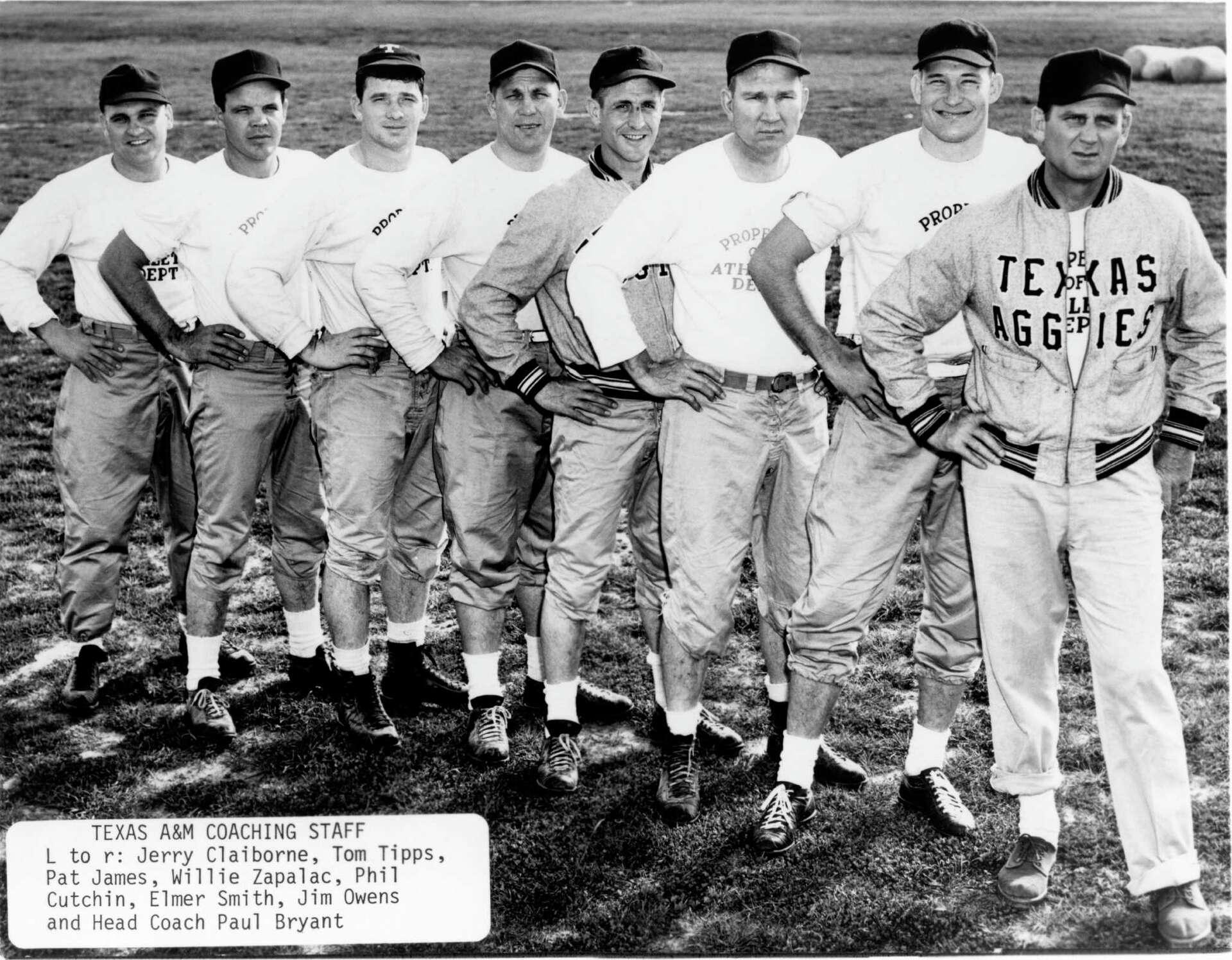
If you want to understand old-school football, look no further than Bear Bryant in 1954. Bryant had just taken over at Texas A&M and believed he needed to make the program TOUGHER. He took roughly 100 players to a remote camp in the Texas Hill Country during a severe heat wave.
The practices have become infamous. Players endured multiple practices per day in extreme heat, limited water by modern standards, little recovery, and repeated physical drills. Injured and exhausted players were expected to continue. By the end of the approximately 10-day camp, only about 35 players remained. Those survivors became known as the Junction Boys.
Ironically, the immediate football results were terrible: Texas A&M went 1–9 in 1954. But Bryant’s team improved to 7–2–1 in 1955 and 9–0–1 in 1956, winning the Southwest Conference. For the next 70 years, football coaches have overvalued toughness through physical abuse and extreme fatigue.
A more recent example of old-school mentality appears in the movie “Remember the Titans.”
The same men who seem to thrive in abusive football environments often become coaches.
This is football tradition.
Traditional football culture worships the grind, celebrates pain, glorifies fatigue, demands military-style discipline, and rewards unquestioning obedience to authority.
Players are conditioned to believe that suffering builds toughness, exhaustion builds character, and obedience builds winners.
They’ve been taught to embrace a system that may destroy their bodies—and they willingly sign up for more.
The ultimate irony? The very things celebrated as the foundation of winning may be the very things that prevent athletes from reaching their potential.
THE BETTER WAY TO WIN
Though we were raised in the tradition that football creates the toughness that defines real men, I have different ideas.
In my opinion, real men are not looking to become subservient or comply with authority. Real men are strong and independent. Real men are healthy, both mentally and physically. Real men don’t submit to physical punishment.
Most athletes want to avoid the bullshit, become talented football players, be a part of a team, play for a coach they love, and win games (and, of course, be popular with girls).
To have a great high school football program, you have to attract both the soldiers and the players, the dogs and the cats. (Dogs are the zealots, kids who would sign up for distasterous voyages or play for abusive football coaches; cats are fast and competitive athletes who are capable of playing multiple sports.) You need BOTH dogs and cats. You need a big roster.
There are many ways to do this.
The easiest way to attract dogs and cats is to have a strong tradition of success. Winning begets winning. In my first coaching assignment as offensive coordinator for the freshmen at Harrisburg H.S. in 1981, we had 65 boys out for freshman football. With a school of only 700 kids, we attracted over 80% of all the freshman boys in the school. Why? In the previous four years under Ken Joggerst, Harrisburg’s varsity went 37-6, winning the state 3A runners-up trophy in 1980. Football became the focus of the town. Every kid wanted to be a Harrisburg Bulldog football player.
But not many schools win 86% of their games and win state trophies. How do you attract dogs and cats if you are not a championship program?
The answer is SPRINT BASED FOOTBALL.
Remember the dogs will play football even if the team was 0-9 the previous year and the coach just got out of prison after doing two years for assault and battery. You don’t have to recruit the dogs. Football is in their blood.
The cats must be recruited. Football teams need the all-conference basketball player who can shut down the other team’s best player, rebound aggressively, and dunk on a fast break. (You also want all his basketball-playing friends.) Football teams need the third baseman from the baseball team that led the conference in home runs and RBIs as a sophomore. Football teams need the 157-pound wrestler who was conference champ at 126 as a freshman and 138 as a sophomore. And football teams need the 6’3”, 230-pound soft kid who may not be a cat but could turn into a BIG CAT. You need all those kids and more… even the Harry Potter nerds.
These are hard lessons for football coaches who don’t want to beg kids to play a sport they would die for. Too many football coaches want to go war with soldiers and to hell with the pussies. #FeedTheDogs
How do you attract the cats?
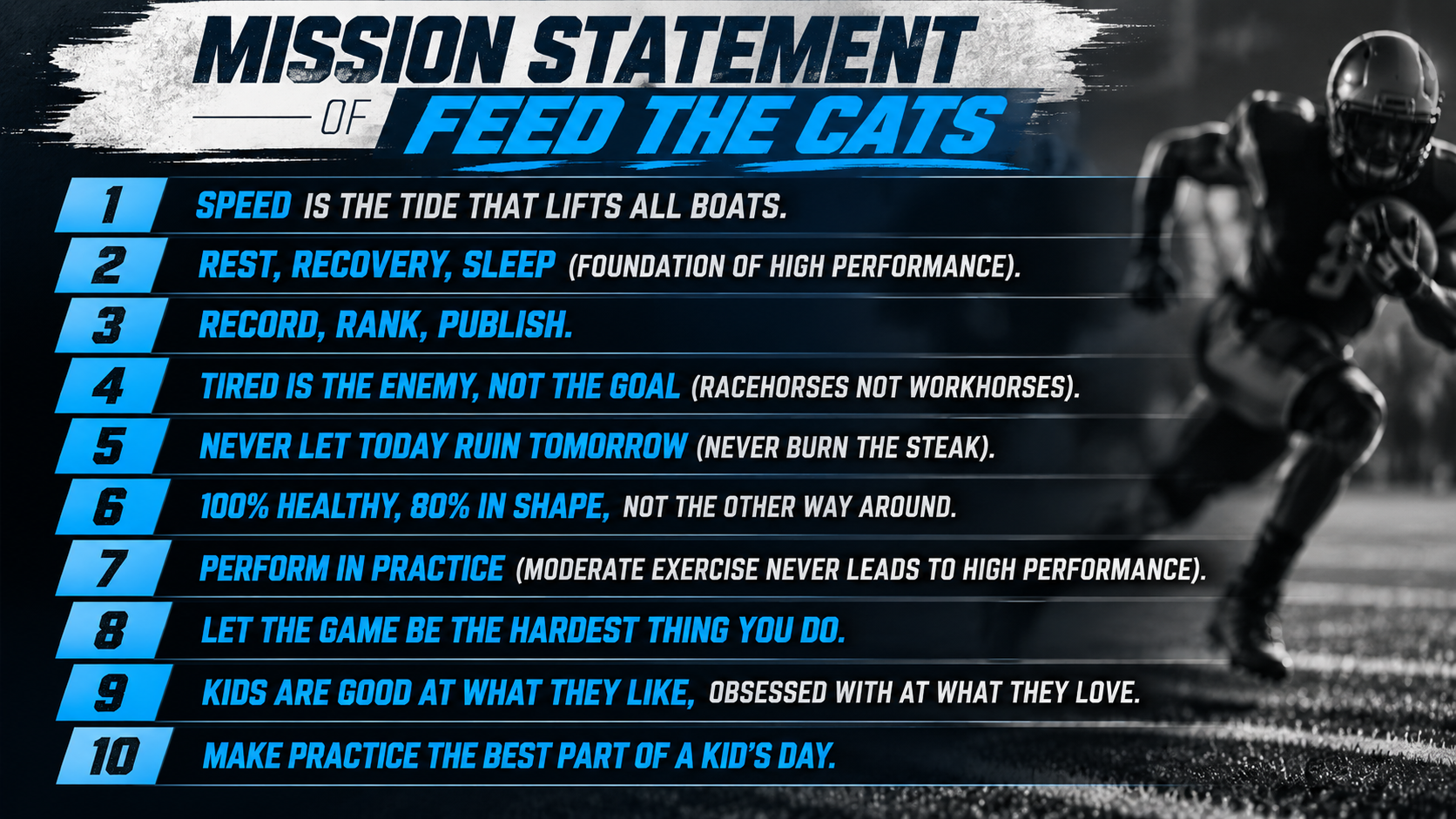
The TEN PILLARS are generic.
Let’s get specific.
Embrace the joyful, disciplined pursuit of less in the summer. (Not the miserable, undisciplined pursuit of more.)
Summer is the key to developing a deep roster.
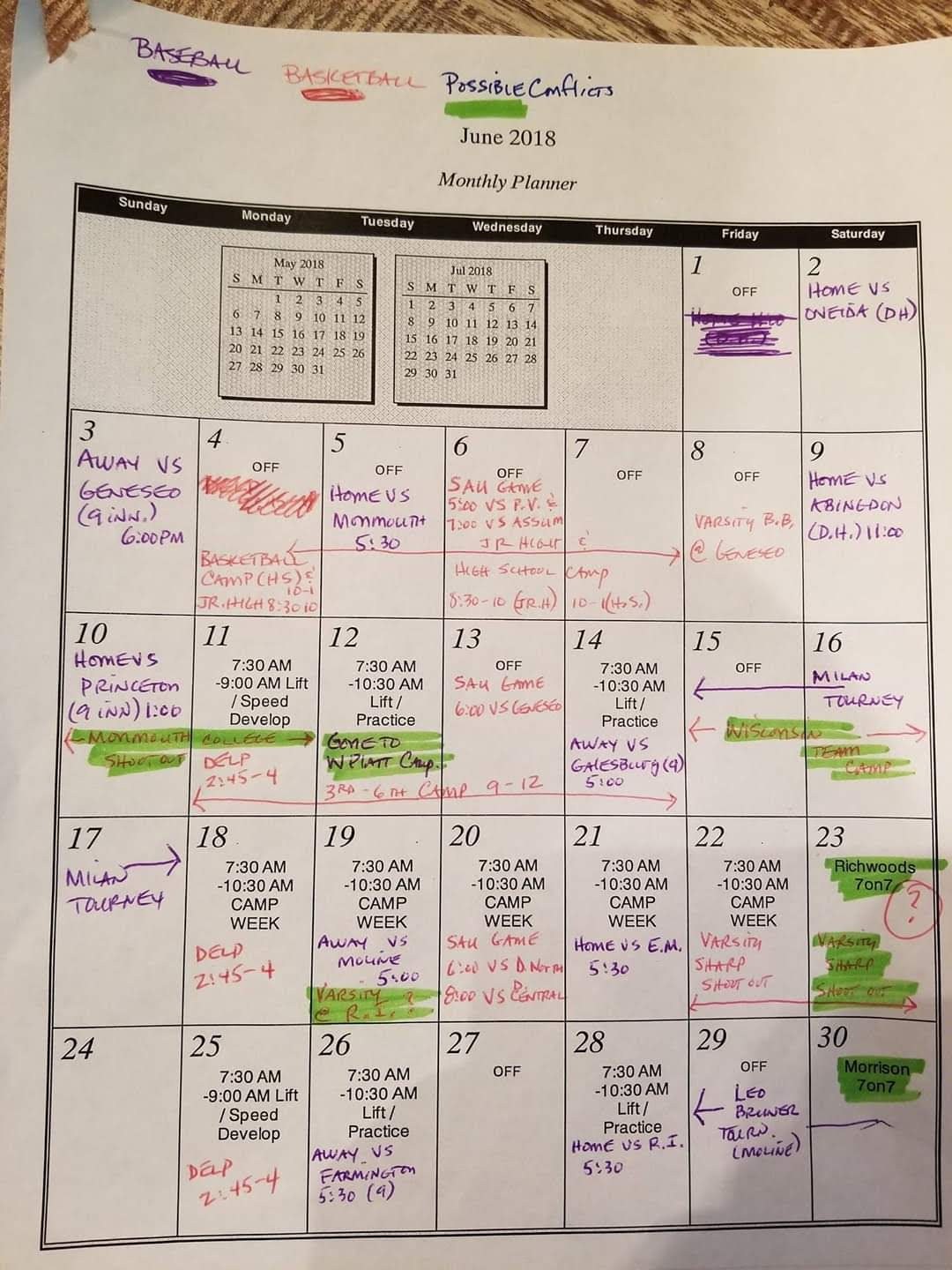
This calendar above is not unique for a multisport athlete in the summer. This athlete plays football, basketball, and baseball. If a football coach is not careful, he will lose this kid due to mandatory summer football workouts.
Unless you want a team of dogs exclusively, you must understand the crazy truth about summer sports. Football is not the only game in town. Summer football needs to turn into the best part of a kid’s day. Gamify training by focusing on competition and always record-rank-publish athletic KPIs. In addition, practice needs to resemble the game that kids want to play. Gamify!
You aren’t preparing marines to storm Iwo Jima. You are not going to war. You are trying to get kids to fall in love with football, get stronger and faster, and form bonds that make leaving the team unthinkable.
There are many high school football teams who would have better seasons if they had no summer program.
I’ve seen high school football teams that require a 6:00 am to noon commitment four to five days a week. Winning programs may survive this, but losing programs that copy this bullshit will get destroyed. Stop copying what championship teams get away with! If you do, you may not field a team in the fall, something that’s happening all over the country. Even if you survive this, your kids may survive but not thrive. Your roster will be reduced. High school football is a numbers game.
Brad Dixon, “The Godfather” of SBF, won his homecoming game last month by forfeit. Unity-Seymour couldn’t field a team. Brad’s lower levels have lost multiple games to cancellations, forcing him to find schools twice their size to fill the void. Numbers are no problem for Brad Dixon, who consistently attracts over half the boys at Camp Point Central to his football program. Only four teams in CPC’s 12-team conference play a freshman schedule.
Garrett Mueller (“Godfather II”) has more than enough players to fill rosters at three levels despite an enrollment of 570 at Stewartville H.S. in Minnesota. Despite competing in Class 4A, Garrett has had to schedule four 6A teams to complete his JV schedule.
Don’t think this is only a problem with small schools. I coached at a school of 2500 kids, and we had to constantly fight for freshman B-games.
Multiple schools in Illinois have had to drop their varsity football program due to lack of interest.
Be sprint-based.
Both Indiana (NCAA Champs 2025) and Wisconsin River-Falls (NCAA DIV-3 Champs 2025) were sprint-based. Neither team advertised this; they didn’t take the field carrying a Feed the Cats flag, but Indiana’s S&C coach Derek Owings told me on a phone call, “We are sprint-based,” and Matt Walker of River-Falls told me at AFCA that Sprint Based Football kept their team healthy. (Derek is now at Tennessee, and Matt is now HC at Drake.)
Indiana started 21 of their 22 first-game starters in the championship game against Miami.
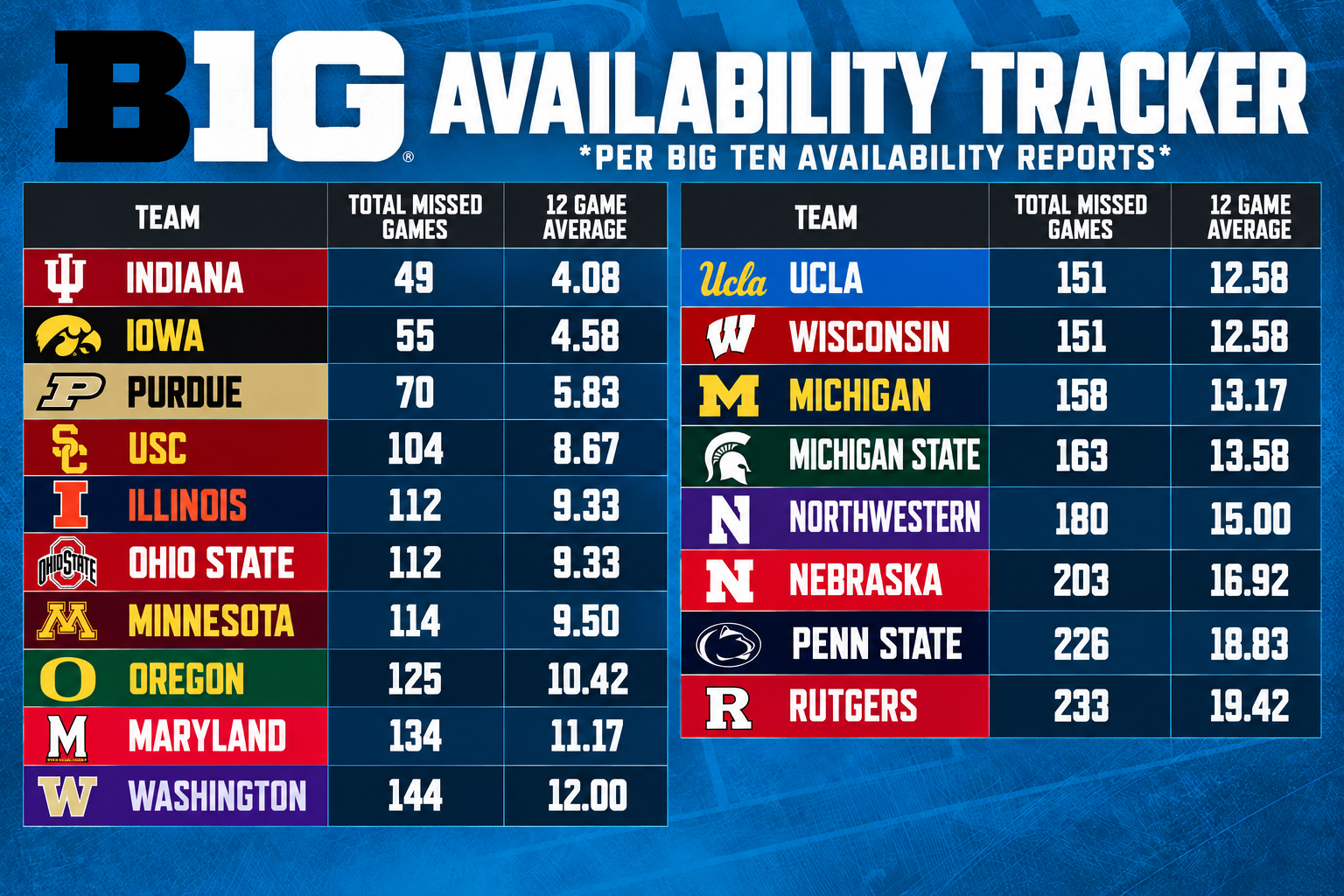
Indiana was the HEALTHIEST team in the Big Ten.
Wisconsin River Falls started all 22 of their first-game starters in the D-3 title game against North Central College (Naperville, IL). Coaches should be held accountable not only for how their teams perform but also for how healthy their players remain. A coach who consistently sacrifices player health in the name of toughness or conditioning shouldn’t just be criticized. That coach should be fired.
Everyone should understand that speed is “the tide that lifts all boats,” but the health aspect is the hidden gem. I’ve always said that speed is the barometer of health, but we can go even further. A fast, fresh, mentally alert, and physically charged body is nearly bulletproof. By the way, you can’t be FAST without being fully charged physically and alert mentally. SPEED and HEALTH are synonymous.
Before you begin to argue that sprint-based football teams are soft, try to understand that FAST, FRESH, & HEALTHY athletes are tougher than slow, fatigued, & unhealthy athletes. Lombardi agreed with this: “Fatigue makes cowards of us all.”
Kurt Cignetti practiced less than any NCAA team (an average of 70 minutes per day, Monday through Friday). His team was #2 in the nation on defense, giving up only 89 yards rushing per game while going 16-0. The NCAA Championship against Miami featured their fastest in-game speeds. Their entire team got FASTER throughout the season. (Remember, faster = healthier.)
I love what Arizona State’s Kenny Dillingham said after a hard-fought win last year against Iowa State in Ames. With a bye week coming, he was giving his team the entire next week OFF. “We need to come back rested, mentally and physically, so we can be PHYSICAL, VIOLENT, and INTENTIONAL.” Fresh and fast is not soft. Arizona State responded by winning their next two games against West Virginia and Colorado.
I could write a book about this stuff (and I have… it will be available soon!).
For now, understand, you need to attract athletes to your football program (dogs, cats, and everyone else). You must keep them healthy and remember, “Speed is the tide that lifts all boats.”
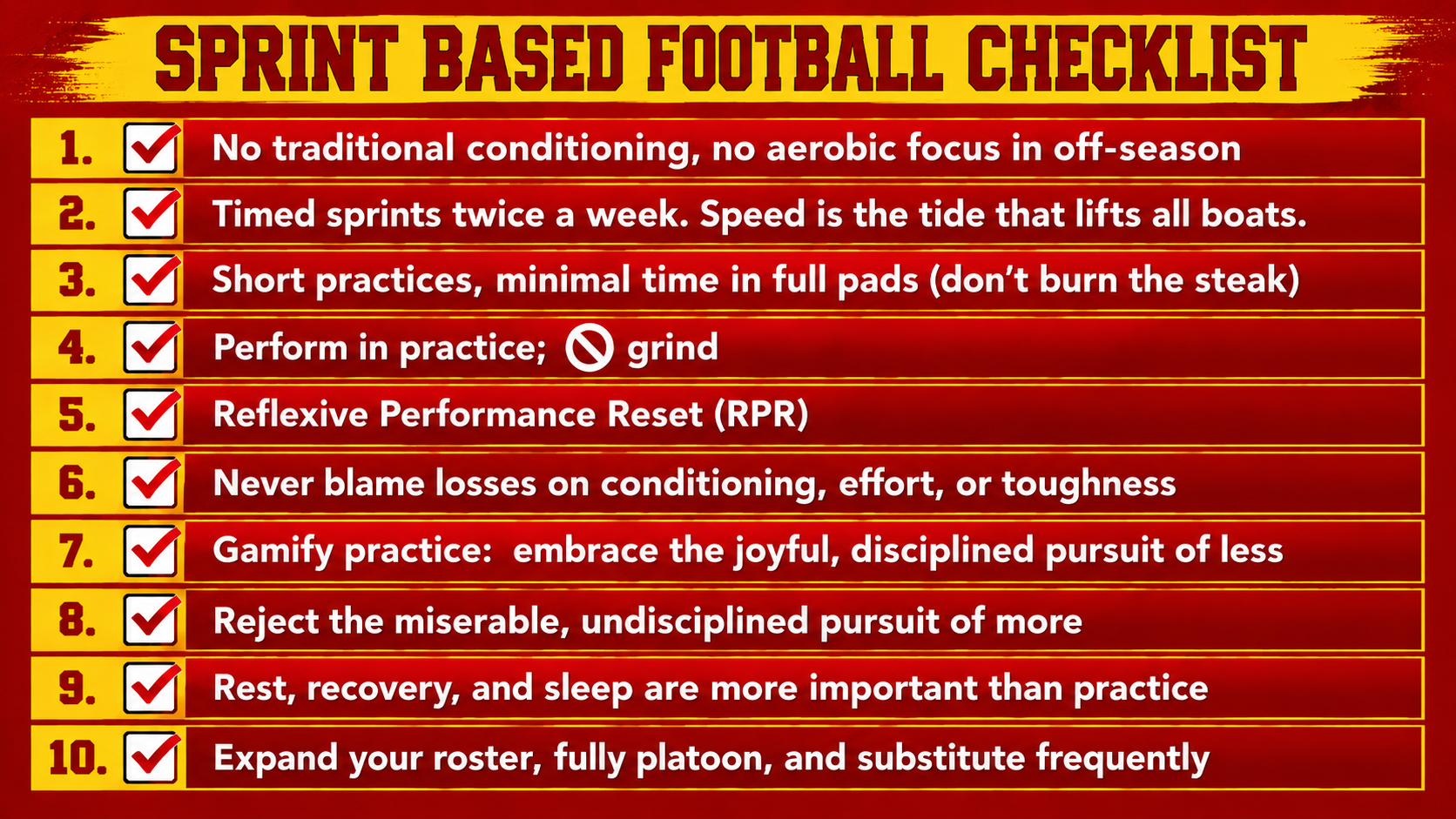
JUST IMAGINE
What if you entered every game one mph FASTER while your opponents entered the game one mph slower?
What if you entered every game 100% HEALTHY and 80% in shape, while your opponents were 100% in shape but only 80% healthy?
What if you entered every game will a full roster of kids who see practice as the best part of their day, while your opponents have decimated rosters due to injuries, apathy, and misery?
What if you developed toughness through love of the game and extreme athleticism while your opponents developed toughness through fatigue and suffering?
Just imagine.
+++
+++
